
यह भी देखें


 14.10.2026 01:35 PM
Gold is famed as a hedge against chaos — yet once turmoil truly arrived, the metal fell for a third straight session.
Gold has been down nearly 20% since the US–Iran conflict intensified in late February, after energy supply disruptions accelerated inflation and forced the Fed to tighten monetary policy. Higher interest rates traditionally work against non-yielding assets like gold.
In that context, Morgan Stanley's higher Brent forecast — $105/bbl in Q4 and $100/bbl in Q1 2027 — weighs on XAU/USD. Supplies from the Gulf and Russia remain about 5.5 million barrels per day below year-ago levels, while tanker freight costs have spiked amid sanctions and longer routes.
Persistent inflationary pressure keeps expectations for further Fed rate increases — and higher Treasury yields — alive, undermining the appeal of the metal.
Flows into gold-focused ETFs
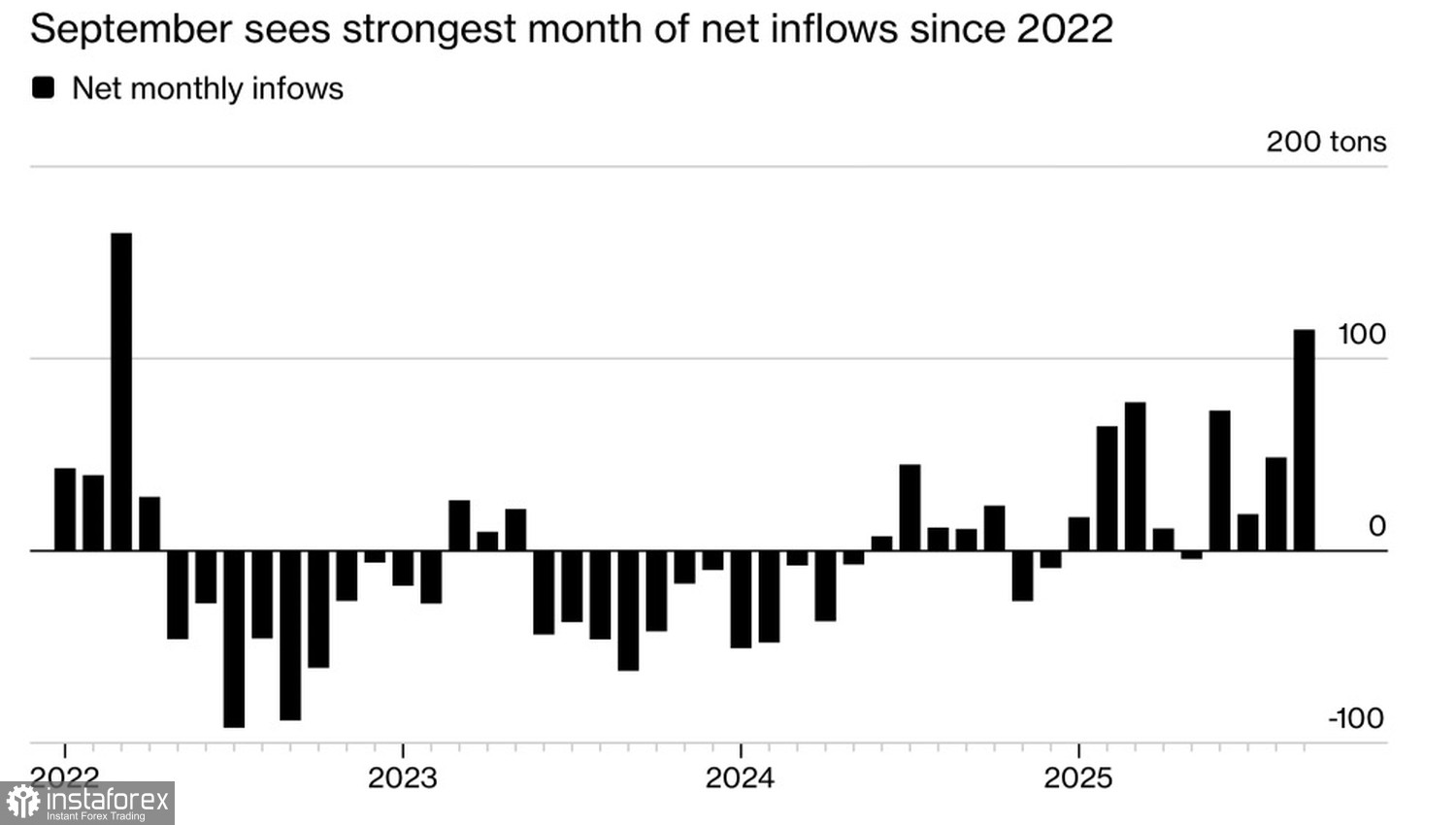
One structural support for XAU/USD remains central bank demand for bullion and renewed investor interest in gold-backed ETFs, even if US Treasury yields continue to pressure prices into Q4.
However, that support has a weakness. Kazakhstan, one of the world's largest official buyers of gold, is pivoting toward sales as high Treasury yields force a rebalancing of reserves. After halting purchases in February 2025, the country's holdings rose to 386 tonnes (about 78% of reserves), and the central bank wants to trim that share to 75% by year-end. Kazakhstan's foreign reserves stood at $66.4 billion in late September and must remain liquid.
Bank of America is cautious on XAU/USD and does not expect prices to hold above $4,000/oz in the near quarter. The bank views recent inflows into gold ETFs as potentially worrisome — weak spot prices can trigger liquidation of inventories while the physical market remains sluggish.
Traders are awaiting the US consumer price index for September, which is forecast to show a 0.6% monthly gain. Later, Fed Chair Kevin Warsh's remarks at the IMF meetings in Bangkok could clarify the Fed's stance and the outlook for continued monetary restriction.
Central banks are rotating from buyers to sellers, but can they sustain a gold rally once rates stop rising?
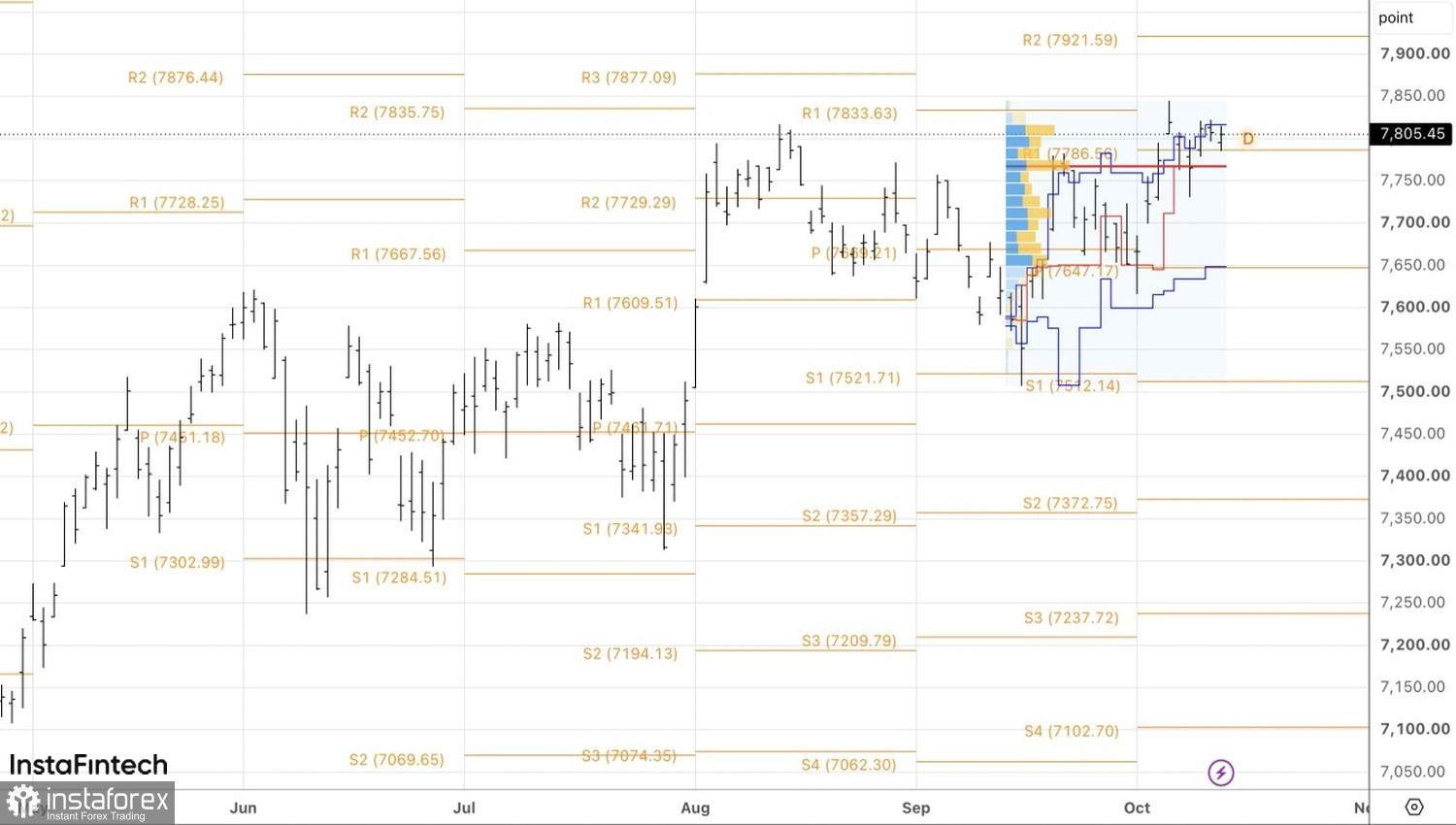
Technically, the daily chart indicates that a drop below the fair-value level of $4,155 would be a worrying sign. A return above that level would justify initiating long positions, as would bounces off support at $4,100 and $4,080.
You have already liked this post today
*यहां पर लिखा गया बाजार विश्लेषण आपकी जागरूकता बढ़ाने के लिए किया है, लेकिन व्यापार करने के लिए निर्देश देने के लिए नहीं |

